The 35+ Athlete's Body: Common Padel Injuries and How to Adapt
Padel asks the body to do things that do not come up much in everyday life. Sudden lateral sprints, sharp stops, repeated overhead shots, and a surface that offers little give underfoot. For players in their twenties, the body tends to absorb all of this without much complaint. For players past 35, the same movements can start to highlight areas of the body that need a bit more attention than they used to.
This is not about padel being a dangerous sport, it is not, and most players go years without serious injury. But certain patterns of strain are common enough among regular players that it is worth understanding what they are, why they happen, and what realistically helps.
Padel elbow
Similar to tennis elbow, padel elbow is a form of tendon irritation around the outside of the elbow, often linked to the repeated gripping and impact involved in striking the ball, particularly on smashes and volleys. It tends to develop gradually, starting as mild discomfort that is easy to ignore, before becoming more persistent.
The most effective approaches tend to involve technique adjustments, appropriate rest between sessions, and gentle, consistent care of the forearm and elbow area. A few minutes spent massaging the forearms in the evening, as part of a wider recovery habit, can help by supporting circulation to an area that has taken repeated impact, though it is not a substitute for addressing the underlying cause if discomfort persists.
Knee strain
The lateral, stop start nature of padel places real demand on the knees, particularly the stabilising muscles and connective tissue around the joint. For players over 35, where joint cartilage has naturally thinned somewhat compared to younger years, this can translate into knee discomfort after sessions involving a lot of sharp direction changes.
Adapting here often means a combination of things: a proper warm-up that prepares the joint for lateral movement, supportive footwear, and recovery habits that support the muscles around the knee rather than the joint itself. Gentle massage to the surrounding muscles, as part of an evening routine, can help ease tension that might otherwise place additional strain on the joint during the next session.
Delayed onset muscle soreness
Almost everyone who plays padel regularly is familiar with DOMS, the muscle soreness that appears a day or two after a particularly demanding session. For players over 35, DOMS can be more pronounced and take slightly longer to resolve, simply because recovery processes are operating a little more slowly than they once did.
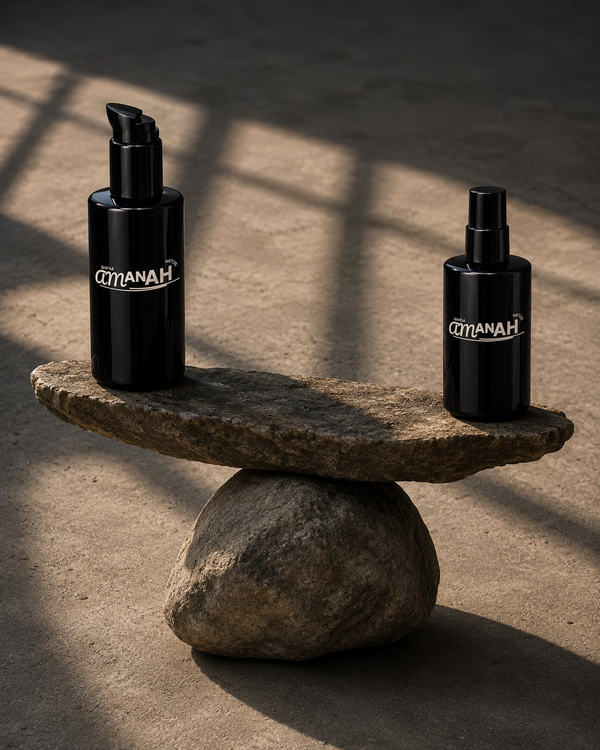
This is one area where small, consistent habits make a clear difference. A morning routine with NAHDA™ before a match, easing muscles into movement, alongside an evening routine with SHIFAA™ afterwards, supporting circulation to areas that took the most strain, can help take the edge off DOMS without requiring any change to how you play.
What recovery oils can, and cannot, do
It is worth being honest about this. A recovery oil is not a treatment for injury, and it will not fix an underlying issue with technique, footwear, or training load. What it can do is support the body's own processes, circulation, muscle tension, and the sense of transition between activity and rest, as part of a wider set of sensible habits.
For most 35-plus players, the goal is not to avoid every ache entirely. It is to build a routine that catches small signals early, supports the body consistently, and reduces the chances that minor strain becomes something that takes you off the court altogether.